For flooring retailers, fitters and contract specialists whose customers are searching by product long before they search by trade
Flooring is unusual. Most trades get found by trade name — people search for a plumber or an electrician. Flooring customers search for LVT, engineered oak, karndean or safety flooring, often knowing exactly what they want before they have thought about who fits it. A website organised around your services rather than around the products people are typing will miss most of that traffic entirely. We build and optimise flooring sites around the way the buying actually happens.
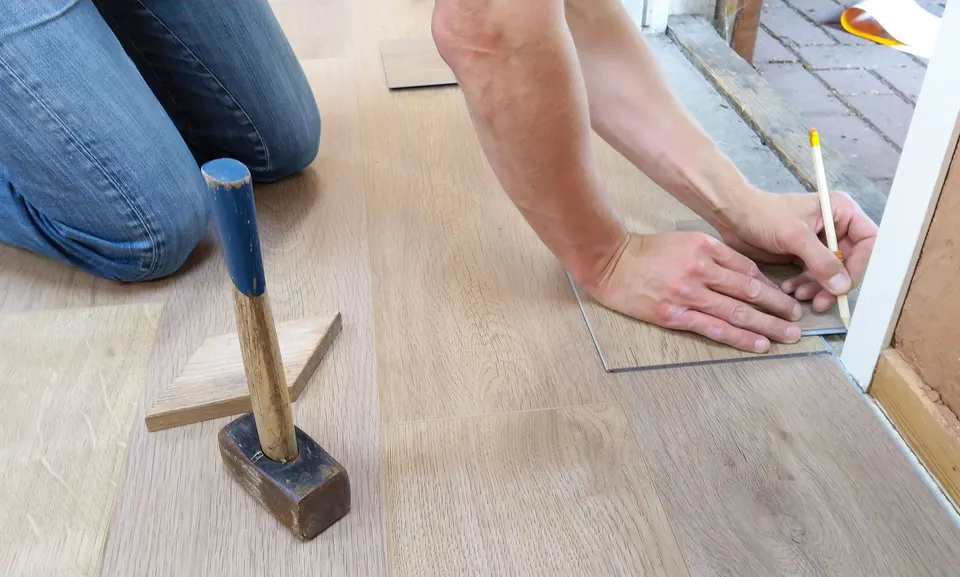
Almost none of them start by searching for a flooring company.
The mistake almost every flooring website makes is organising itself the way the business is organised — supply, fit, domestic, commercial — rather than the way customers search, which is overwhelmingly by material and by brand. A single page listing every floor type you sell will not rank for any of them, because it is never clearly about one thing.
The practical fix is usually a page per material, each carrying real fitted price guidance, subfloor requirements and honest comparisons against the alternatives. We worked through exactly this with a Nottingham flooring contractor.
Supply-only and supply-and-fit deserve a mention here too, because they behave as separate search universes. Someone searching for a price per square metre is a different customer from someone searching for a fitter, and a page that tries to answer both usually converts neither.
This is the fastest win available to most flooring businesses, and it is almost always sitting unused.
Manufacturer names carry serious search volume in flooring in a way they simply do not in most trades. Customers walk into a showroom already saying a brand name. They search that brand name plus their town. If you supply and fit those ranges — and particularly if you hold approved or accredited installer status with a manufacturer — that is a specific, verifiable, high-intent fact that belongs prominently on your website.
Most flooring sites mention brands once, in a logo strip on the homepage, with the names locked inside image files where no search engine can read them. The brand names then appear nowhere in the actual text of the site. That is the entire brand-led search category given away for nothing.
The same applies to specifics your team treats as ordinary: which wear classes and thicknesses you stock, whether you offer subfloor levelling and screeding, whether you uplift and dispose of old flooring, whether you fit underfloor heating systems beneath, and what your realistic lead time is from measure to fit. Each of those is a search somebody is making and a reason to be chosen.
Interest-free credit is close to standard in flooring retail, and it converts — but the way it is presented on a website is a regulated matter, not a marketing decision.
Advertising consumer credit in the UK generally requires the business to be authorised by the Financial Conduct Authority as a credit broker, or to be an appointed representative of an authorised firm. There are also specific rules governing how credit is promoted: representative examples, APR presentation, and the prominence of certain information. Firms are usually required to display their FCA firm reference number.
In practice most flooring retailers work through a finance provider who sets out what may and may not be said. The problem we see is not businesses ignoring that — it is compliant wording being quietly lost during a website rebuild, or a "0% finance available" banner being added to a new page by someone who did not know the rules attached to it.
There is a related point on home visits. Flooring is frequently sold in the customer's home after a measure, which brings consumer cancellation rights into play, alongside particular treatment for goods cut or made to the customer's specification. Setting out your position clearly on the website reduces disputes and reads as confidence rather than caution.
Which of these matters most depends on whether you are showroom-led, fitting-led or contract-led.
Flooring retailers often tell us the showroom brings in enough work. Frequently true — and it hides two things.
The first is that the research now happens long before the visit. By the time somebody walks in, they have usually spent weeks looking at materials and prices online, and have often already ruled out two or three suppliers on the basis of their websites alone. You never meet the customers you lost that way, so it never feels like a problem.
The second is that footfall favours whatever you are already known for. If your reputation locally is carpets, you will keep being asked about carpets, even if the margin you actually want is in LVT and engineered wood. Search lets you deliberately build demand for the work you would rather be doing, rather than the work you happen to be known for.
None of this means the showroom stops mattering. It means the website should be doing the qualifying work before somebody walks through the door.
The same published pricing as everything else we do. No sector premium.
No VAT to add — we are not VAT registered, so the figure you are quoted is the figure you pay. Full detail on our SEO services page, and we work across other trades too, including steel and metalwork companies.
LET’S CONNECT
Company Reg. 08491883
4 Marlborough Road, Woodthorpe, Nottingham, NG5, United Kingdom